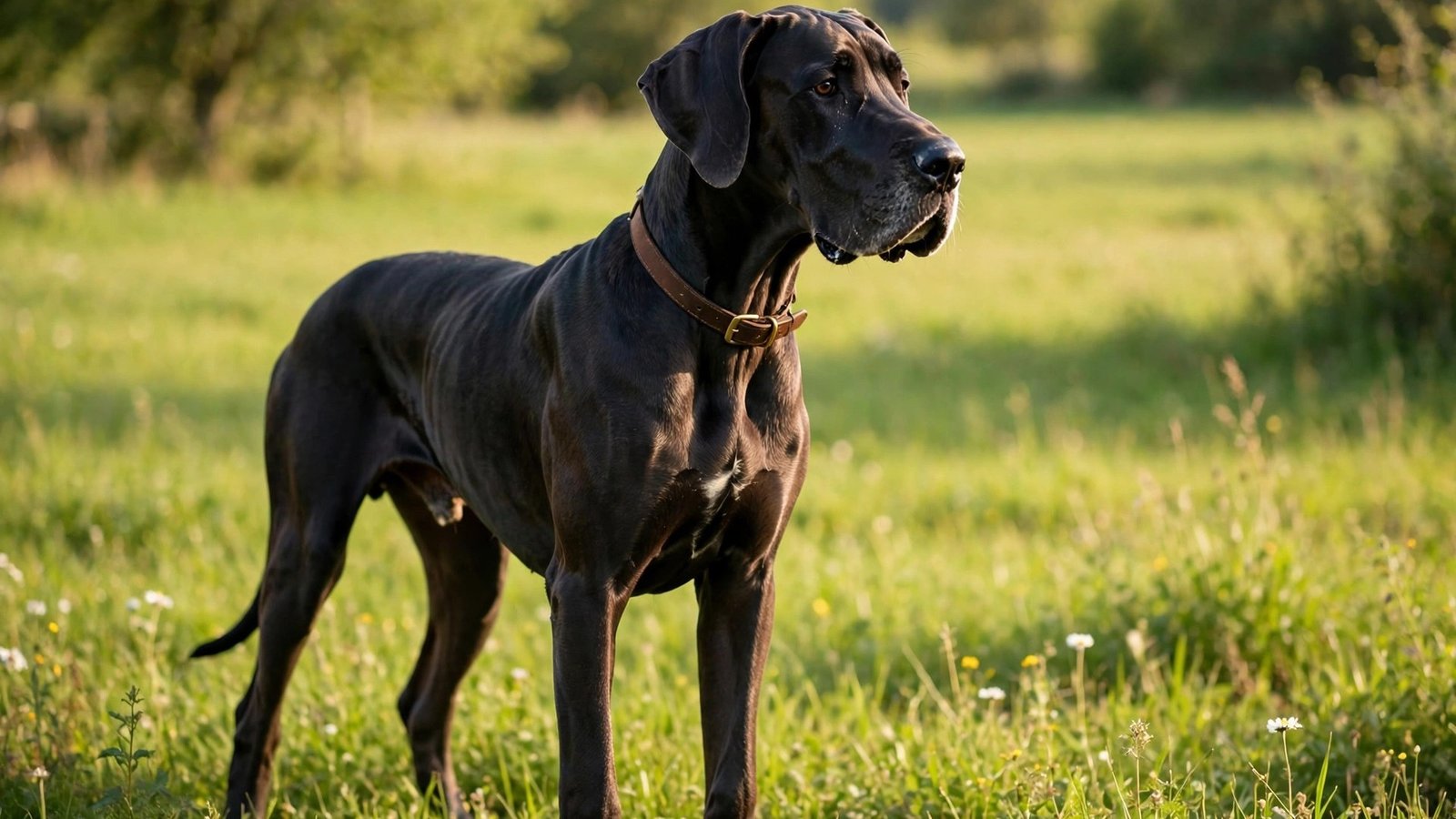
The Great Dane is the gentle giant of the dog world — one of the tallest breeds, yet calm, friendly and famously patient. Bred in Germany to hunt wild boar, the modern Dane is a loving family companion that wants nothing more than to lean on you, follow you around, and (despite its size) sit on your lap.
Quick Facts
- Origin: Germany
- Group: Working
- Lifespan: 7–10 years
- Weight: 45–90 kg
- Height: 71–86 cm at the shoulder
- Temperament: Gentle, friendly, patient, calm
- Good with kids: Yes — a gentle giant, best with older children
- Good with other pets: Yes, usually friendly with other dogs and cats
- Exercise needs: Moderate — about 1 hour a day
- Grooming: Low — short coat, easy care
Temperament & Personality
Great Danes are calm, affectionate and deeply loyal. They bond closely with their family, love children, and are famously patient — they take most things in their stride. They are not hyperactive dogs; a Dane is happy with a good walk and then a long nap, preferably pressed against a person. They are watchful and will bark to announce a visitor, but they are not aggressive. Their sheer size means early training and socialisation matter: a well-mannered Dane is a joy, while an untrained one can knock people over by accident. They do not like being left alone for long.
Health
Great Danes need an honest health note: the breed has a short lifespan, and the biggest risk is bloat (gastric dilatation-volvulus) — a life-threatening twisting of the stomach. Feed two or three smaller meals a day, use a slow feeder, and never exercise the dog for an hour after eating. Other known issues include hip dysplasia, heart disease (dilated cardiomyopathy), bone cancer (osteosarcoma), and wobbler syndrome of the neck. Buy from a breeder who health-tests the parents, keep the dog lean, and see the vet regularly.
Training
Great Danes are gentle and eager to please, and training should start early — a 70 kg dog that pulls on the lead or jumps up is a real problem. Short, fun, reward-based sessions work best, and early socialisation with people, children and other dogs is essential. Teach a reliable recall and a calm greeting from puppyhood. Danes respond to gentle, consistent handling; harsh methods frighten them.
Food & Nutrition
A Great Dane needs a good-quality large-breed food in measured meals — two or three smaller meals a day, never one large meal, to reduce the risk of bloat. Puppies need a large-breed puppy food fed carefully, because growing too fast strains the joints. Treats should be counted as part of the daily intake. A vet can advise the right amount for your dog’s age and weight, and fresh water should always be available.
Grooming
The Great Dane’s short, smooth coat is very easy to care for: a weekly brush is enough, and baths only when dirty. The ears should be checked weekly, nails trimmed regularly — big dogs wear nails down slowly on soft ground — and teeth brushed. Great Danes shed moderately.
Exercise
A Great Dane needs about 1 hour of activity a day: walks and gentle play. They are not built for long runs, and puppies must not be over-exercised — no jumping, no long hikes, and no stairs until the joints are mature (around 18 months). Adult Danes enjoy long walks and a good run in a secure area. A tired Dane is a calm Dane; a bored one will chew furniture.
Is the Great Dane Right for You?
The Great Dane suits families with space who want a calm, gentle, loving giant and can accept the short lifespan, the food bill and the vet costs. It does well in a house with a garden. It is less suited to small flats, owners who cannot lift or manage a very large dog, or anyone wanting a long-lived breed.
FAQs
Are Great Danes good for first-time owners?
They can be, for a committed first-time owner with space and time. They are gentle and trainable, but their size, short lifespan and health costs surprise many new owners.
Do Great Danes shed a lot?
Moderately. Their short coat sheds all year but is easy to manage with a weekly brush.
How much exercise does a Great Dane need every day?
About 1 hour of walks and gentle play, avoiding over-exercise in puppies.
Leave a Reply