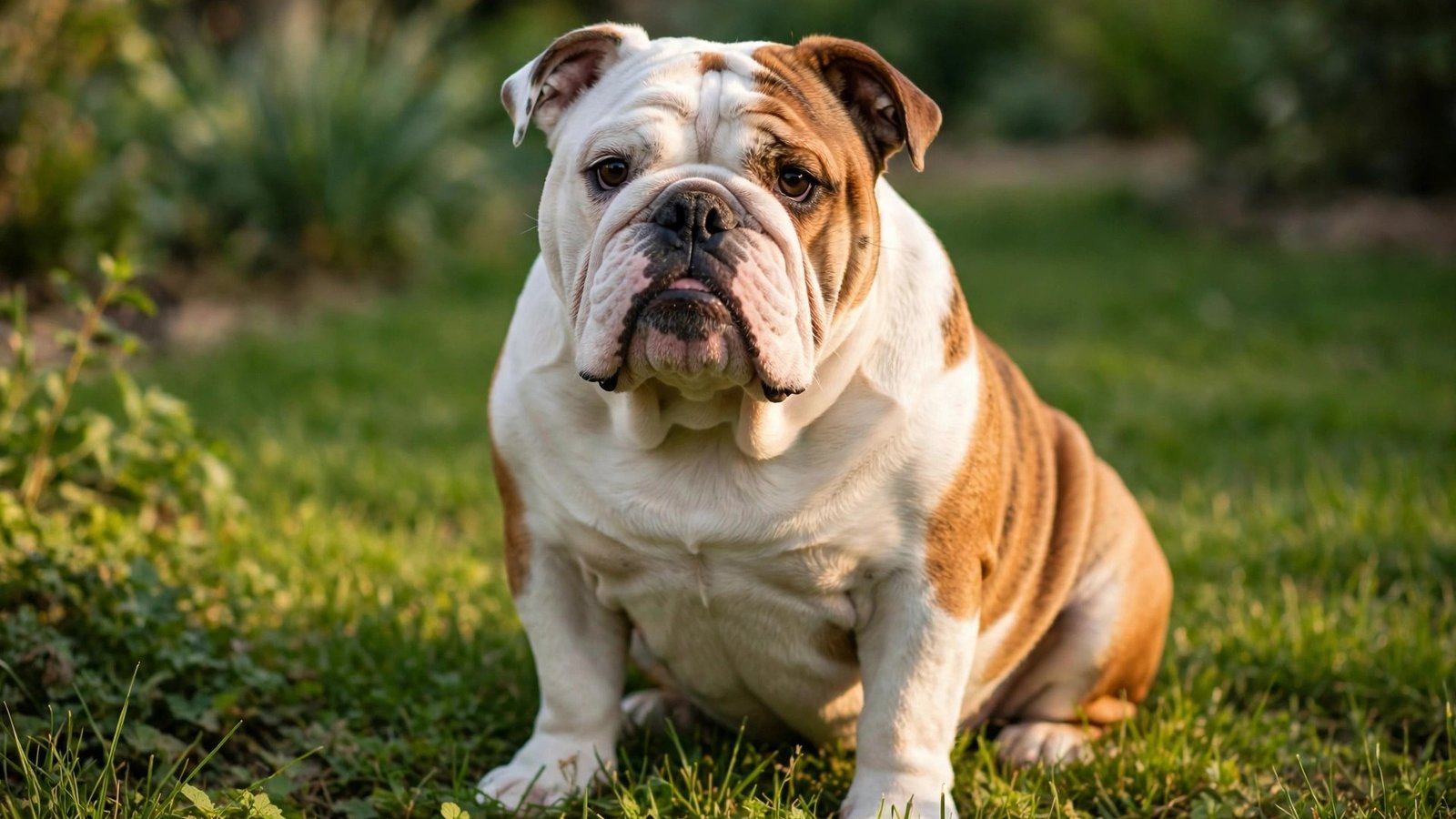
The Bulldog — the English Bulldog — is a calm, loyal, and deeply charming companion with a face nobody forgets. Once a bull-baiting dog in England, the modern Bulldog has been bred for temperament for over a century and is now a gentle, affectionate family dog that is happiest on the sofa with its people.
Quick Facts
- Origin: England
- Group: Non-Sporting
- Lifespan: 8–10 years
- Weight: 18–25 kg
- Height: 31–40 cm at the shoulder
- Temperament: Calm, loyal, friendly, stubborn
- Good with kids: Yes — patient and gentle with children
- Good with other pets: Usually yes, with socialisation
- Exercise needs: Low to moderate — about 30–60 minutes a day
- Grooming: Low coat care, but skin folds need regular cleaning
Temperament & Personality
Bulldogs are calm, steady, and loyal. They bond closely with their family, love children, and are famously patient. They are not hyper or demanding — a Bulldog is content with a short walk and a long nap, and they make excellent apartment dogs. They do have a stubborn streak. A Bulldog will happily ignore a command it does not feel like following, so training needs patience and good treats. They are also comical, snoring, snorting companions with huge personalities.
Health
Bulldogs need more health awareness than most breeds. Their flat face (brachycephalic) means they can struggle to breathe, snore loudly, and overheat easily — never exercise a Bulldog in hot weather, and keep it cool in summer. They are prone to skin infections in their facial folds, hip dysplasia, eye problems, and breathing issues. Buy from a breeder who health-tests and breeds for better breathing, keep the dog lean, and choose a vet experienced with flat-faced breeds.
Training
Bulldogs are intelligent but stubborn, so training works best with short, fun sessions, plenty of treats, and patience. Start socialisation early so the puppy grows confident around people and other dogs. House training can take a little longer than average. Never use harsh methods — a Bulldog responds to encouragement, not force.
Food & Nutrition
Bulldogs gain weight easily, and extra weight makes their breathing and joints worse. Feed measured meals of a good-quality complete food, keep treats small, and watch the waistline. Two meals a day suits most adults. A vet can advise the right amount for your dog. Fresh water should always be available, and the dog should not eat right before exercise.
Grooming
The Bulldog’s short coat is easy: a weekly brush is enough. The important job is the skin folds on the face — clean and dry them regularly to prevent infection. Also clean the tail pocket if your dog has one, check ears, and trim nails. Bulldogs drool and can be gassy, which is part of the charm.
Exercise
A Bulldog needs about 30–60 minutes of gentle activity a day — short walks and play. They are not built for running, long hikes, or heat. In warm weather, walk early in the morning or late in the evening, carry water, and watch for heavy panting. Swimming is not safe for most Bulldogs because of their heavy build.
Is the Bulldog Right for You?
The Bulldog suits calm homes, apartment living, and owners who want a loyal, low-energy companion and can manage its health needs and cleaning routine. It is less suited to very hot climates, very active owners, or anyone unprepared for vet bills and daily fold cleaning.
FAQs
Are Bulldogs good for first-time owners?
Yes, if the owner understands the breed’s health needs. Bulldogs are calm and loving, but they need an owner who takes breathing, heat, and weight seriously.
Do Bulldogs shed a lot?
Moderately. They shed all year, but the short coat is easy to manage with a weekly brush.
How much exercise does a Bulldog need every day?
About 30–60 minutes of gentle walking and play. Avoid exercise in heat.