
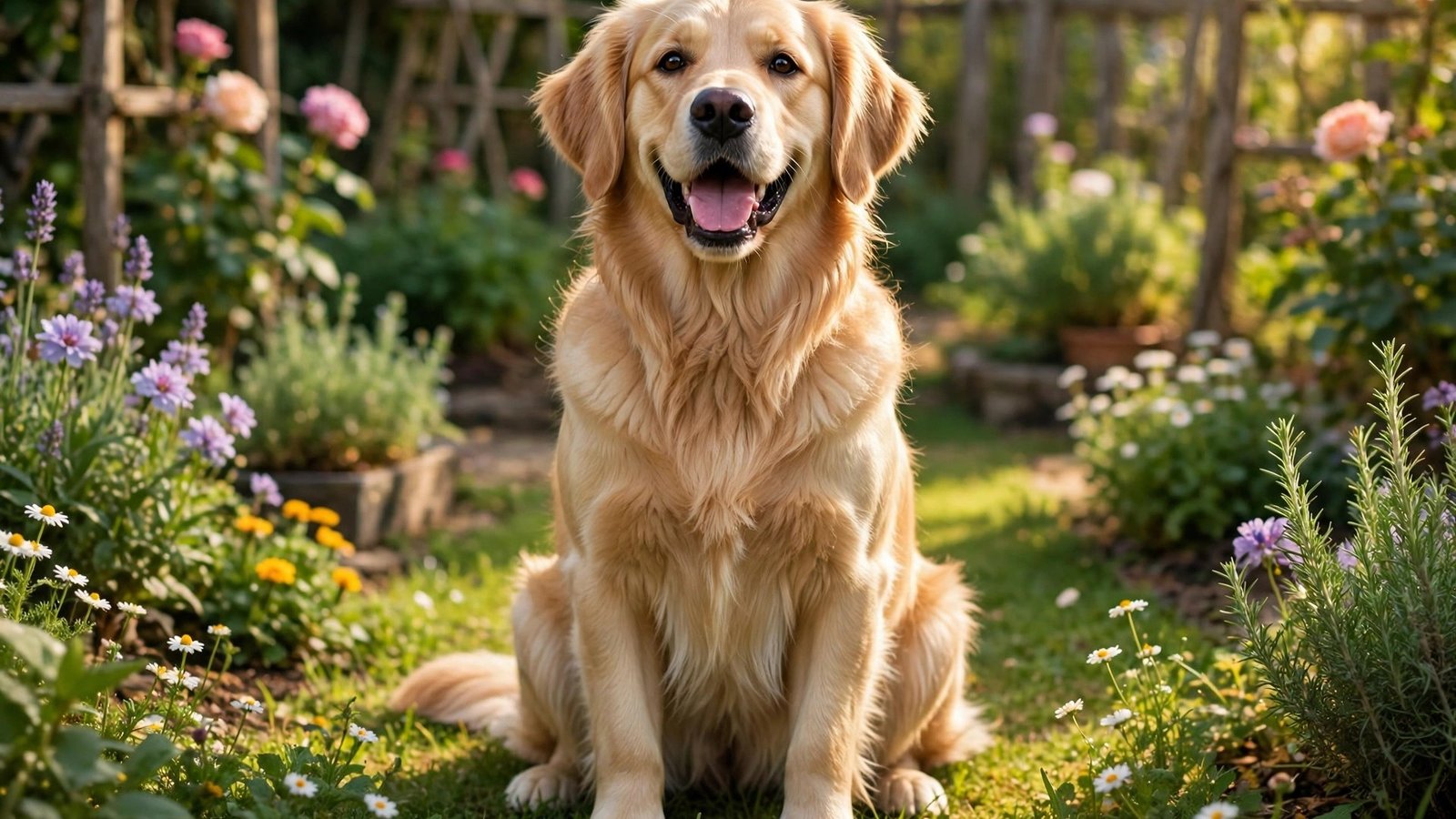
The Golden Retriever is the gentle golden-hearted family dog. Developed in Scotland in the 1800s as a gundog for retrieving game, it combines a soft mouth, a love of water, and a famously sweet nature. Goldens are patient with children, friendly with strangers, and happiest when they are part of family life.
Quick Facts
- Origin: Scotland
- Group: Sporting (Gun Dog)
- Lifespan: 10–12 years
- Weight: 25–34 kg
- Height: 51–61 cm at the shoulder
- Temperament: Friendly, gentle, loyal, eager to please
- Good with kids: Yes — one of the best family breeds
- Good with other pets: Yes, very sociable
- Exercise needs: High — about 1–2 hours a day
- Grooming: Moderate to high — long coat needs regular brushing
Temperament & Personality
Golden Retrievers are famously gentle and friendly. They love people of all ages, get along with other dogs and pets, and rarely show aggression. They are patient with children and often seem to understand when to be calm around little ones. Goldens are also deeply people-focused and can suffer if left alone for long periods. They are not guard dogs — a Golden is more likely to welcome a stranger with a wagging tail than to warn them off. They stay playful and puppy-like well into adulthood.
Health
Goldens are generally healthy but the breed is prone to a few known issues: hip and elbow dysplasia, eye conditions such as cataracts, ear infections (those long ears trap moisture), and a higher-than-average risk of certain cancers. Buying from a breeder who health-tests the parents, keeping the dog lean, and regular vet checks all help. Clean the ears regularly, especially after swimming.
Training
Golden Retrievers are easy and enjoyable to train. They are food-motivated, eager to please, and quick learners, which is why they work as guide dogs, therapy dogs, and assistance dogs. Start training and socialisation early, use positive methods with treats and praise, and keep sessions fun. They respond badly to harsh handling — a Golden trained with kindness will do almost anything for you.
Food & Nutrition
An adult Golden does well on two measured meals a day of a good-quality complete food, with treats kept small. Goldens gain weight easily, so measure food rather than free-feeding and watch the waistline. Puppies should eat large-breed puppy food for steady growth. A vet can advise the right amount for your dog’s age and activity.
Grooming
The Golden’s long, feathered coat needs brushing two to three times a week to prevent tangles, and more often during shedding seasons. Baths only when dirty. The feathering on the legs, chest, and tail tangles easily, so a quick daily brush is ideal. Trim nails, clean ears, and check for mats behind the ears and under the legs.
Exercise
A Golden Retriever needs about 1–2 hours of activity a day: walks, play, and ideally swimming, which they adore. They also need mental work — retrieving games, scent work, and training keep them happy. A bored Golden will find its own entertainment, usually involving your shoes or the garden.
Is the Golden Retriever Right for You?
The Golden suits families, first-time owners, and anyone who wants a gentle, friendly, trainable companion and can give it company, exercise, and regular grooming. It is less suited to people who are away all day, or who want a guard dog or a low-shedding breed.
FAQs
Are Golden Retrievers good for first-time owners?
Yes. Goldens are one of the best breeds for first-time owners — friendly, forgiving, and easy to train.
Do Golden Retrievers shed a lot?
Yes. They shed all year and more heavily in spring and autumn. Regular brushing keeps it manageable.
How much exercise does a Golden Retriever need every day?
About 1–2 hours of walks and play, plus training or games for the mind.
Leave a Reply