
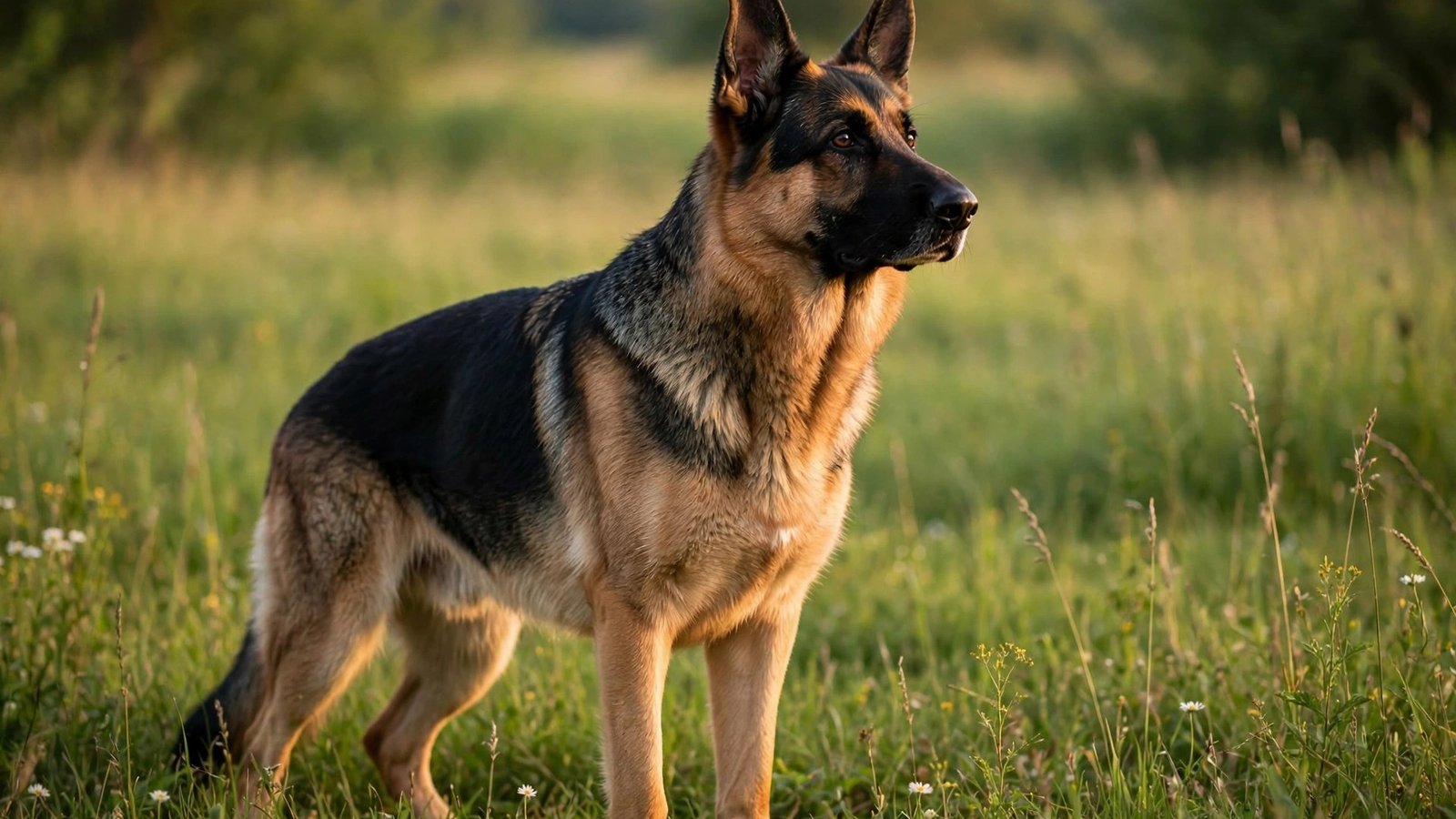
The German Shepherd is one of the most capable and loyal dog breeds in the world. Developed in Germany in the late 1800s as a herding and working dog, it is now best known as a police, military, and service dog — but at home it is a devoted family companion that bonds deeply with its people and takes its job of watching over them very seriously.
Quick Facts
- Origin: Germany
- Group: Herding / Working
- Lifespan: 9–13 years
- Weight: 22–40 kg
- Height: 55–65 cm at the shoulder
- Temperament: Loyal, intelligent, confident, watchful
- Good with kids: Yes, with supervision and socialisation — best with older children
- Good with other pets: With early socialisation, usually yes
- Exercise needs: High — about 1–2 hours a day
- Grooming: Moderate to high — heavy shedder
Temperament & Personality
German Shepherds are confident, loyal, and protective. They bond closely with their family and are naturally watchful around strangers, which makes them excellent guard dogs. With their own people they are affectionate and playful; with strangers they are reserved until they are sure there is no threat. This is a sensitive, intelligent breed. A German Shepherd that is well trained and well exercised is calm and steady. One that is bored or under-trained can become anxious, reactive, or destructive. They need an owner who is consistent and gives them direction.
Health
The best-known health concern in German Shepherds is hip and elbow dysplasia, which is why buying from a breeder who health-tests the parents matters. The breed can also be prone to bloat (gastric torsion), degenerative myelopathy in old age, and some eye and skin conditions. Feeding measured meals, avoiding exercise right after eating, keeping the dog lean, and regular vet checks all help.
Training
German Shepherds are among the easiest breeds to train — they learn fast and love having work to do. Early socialisation is essential: introduce the puppy to many people, dogs, places, and sounds so it grows into a confident adult rather than a fearful one. Use firm, fair, positive training. This breed thrives on structure, obedience work, tracking, and agility. Harsh methods backfire with a sensitive dog like this.
Food & Nutrition
An adult German Shepherd does well on two measured meals a day of a good-quality complete food suited to large, active breeds. Puppies should eat large-breed puppy food for steady growth. Because bloat is a risk, feed smaller meals rather than one large one, use a slow-feeder bowl if the dog gulps food, and rest the dog for an hour after eating. A vet can advise the right amount for your dog’s age and activity.
Grooming
German Shepherds have a dense double coat and shed heavily, especially twice a year when they “blow” their coat. Brush two to three times a week, daily during shedding seasons. Baths only when dirty. Check ears and trim nails regularly. Their coat is fairly easy to care for apart from the shedding.
Exercise
A German Shepherd needs about 1–2 hours of activity daily — walks, play, and training work. Mental work is just as important as physical exercise: obedience training, scent games, tracking, and agility keep this clever breed satisfied. A German Shepherd with a job is a happy dog.
Is the German Shepherd Right for You?
The German Shepherd suits experienced or committed owners who want a loyal, trainable, protective companion and can give it training, exercise, and structure every day. It is less suited to first-time owners who want a low-maintenance dog, or to homes where the dog would be left alone for long hours.
FAQs
Are German Shepherds good for first-time owners?
They can be, but only for owners ready to commit to training and socialisation. A well-trained German Shepherd is a wonderful companion; an untrained one is a handful.
Do German Shepherds shed a lot?
Yes, heavily. They shed all year and blow their coat twice a year. Regular brushing is essential.
How much exercise does a German Shepherd need every day?
About 1–2 hours, plus training or mental work. They need a job, not just a walk.
Leave a Reply