
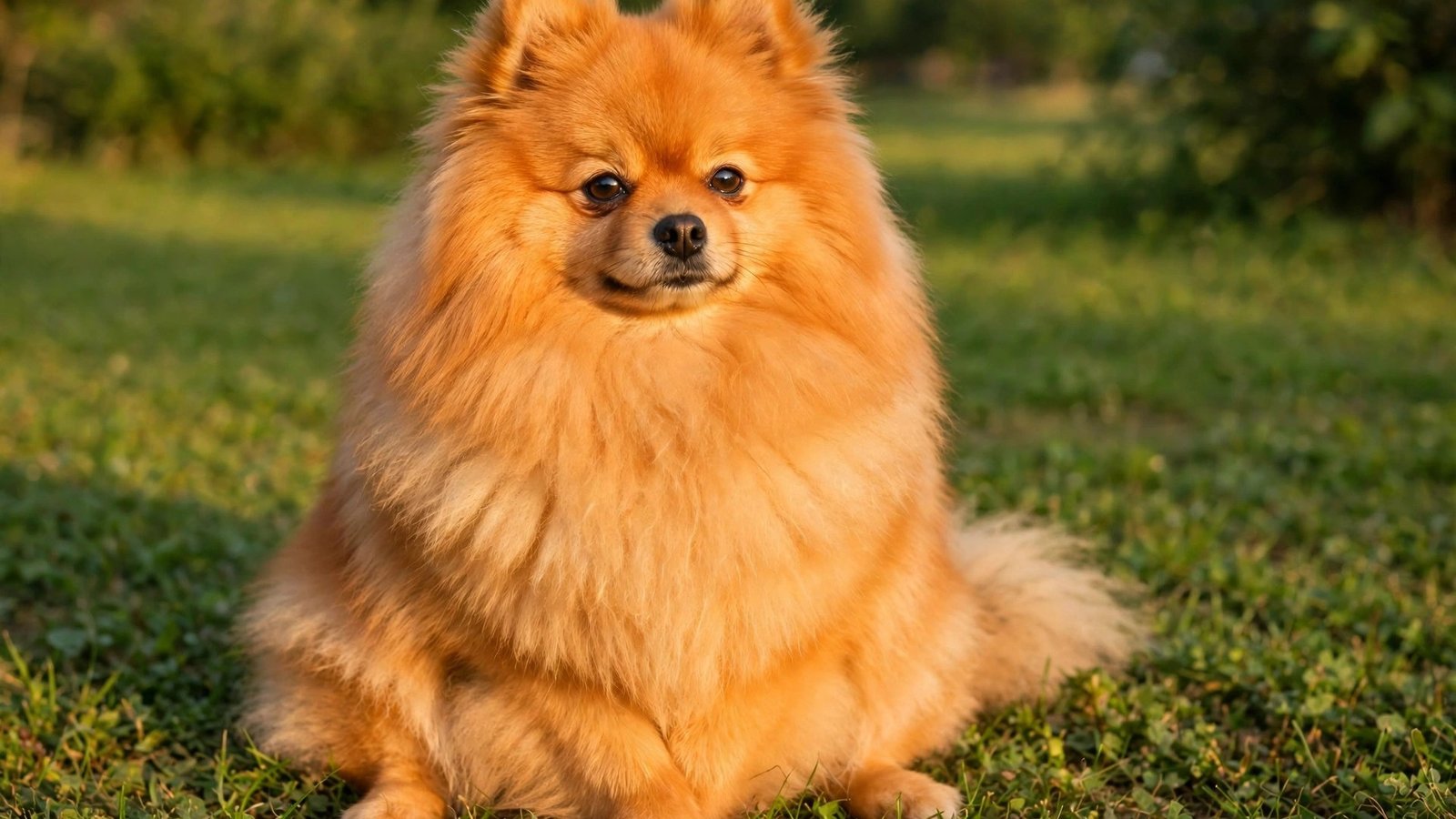
The Pomeranian — the Pom — is a tiny, fluffy companion with a fox-like face and a huge personality. Descended from large Arctic sled dogs, the Pom is bold, lively and intelligent, with a thick double coat and a spirit far bigger than its size. It is a loyal companion that loves to be at the centre of family life.
Quick Facts
- Origin: Germany / Poland (Pomerania).
- Group: Toy.
- Lifespan: 12–16 years.
- Weight: 1.5–3 kg.
- Height: 15–18 cm at the shoulder.
- Temperament: Lively, bold, intelligent, affectionate.
- Good with kids: Yes — best with older, gentle children.
- Good with other pets: Yes, with early socialisation.
- Exercise needs: Low to moderate — about 30 minutes a day.
- Grooming: High — thick double coat needs regular brushing.
Temperament & Personality
Pomeranians are lively, confident and devoted. They bond closely with their people, love to be carried and cuddled, and are surprisingly bold around much bigger dogs — sometimes too bold. They are alert watchdogs that bark to announce visitors, and they do not like being left alone for long. They can be a little possessive and feisty, and they need early socialisation to stay friendly. Despite the small size, a Pom is a real spitz dog at heart: curious, stubborn and full of energy.
Health
Pomeranians are generally long-lived, but the breed has some known issues: kneecap problems (luxating patella), collapsing trachea (use a harness, never a collar, for walks), dental problems (small mouths, crowded teeth — brush regularly), eye problems, low blood sugar (hypoglycaemia) in young puppies, and a coat-loss condition called alopecia X (black skin disease) in some lines. Buy from a breeder who health-tests the parents, and see the vet regularly.
Training
Pomeranians are smart and quick to learn, but they can be stubborn and house training often takes patience — a consistent routine and plenty of praise matter more than anything. Short, fun, reward-based sessions work best. Early socialisation with people, children and other dogs helps them stay confident, and teaching a “quiet” cue early helps with barking. Keep training positive; harsh methods make a Pom dig its heels in.
Food & Nutrition
A Pomeranian needs measured meals of a good-quality complete food made for small breeds — two to three small meals a day suit most adults. Treats should be counted as part of the daily intake, and the dog should not be fed from the table. Some Poms have sensitive stomachs, so a vet may need to help find a suitable food. Fresh water should always be available.
Grooming
The Pom’s thick double coat is its signature — and its biggest commitment. It needs brushing two to three times a week to prevent tangles and mats, plus regular baths. Never clip the coat short — it protects the skin and can grow back badly. The hair around the eyes needs keeping clean, ears should be checked weekly, and teeth brushed regularly. Pomeranians shed moderately to heavily.
Exercise
A Pomeranian needs about 30 minutes of gentle activity a day: short walks and indoor play. They are happy with a small garden or a flat, and they love games and short training sessions. Use a harness for walks to protect the trachea, and be careful in very cold weather — a small dog chills easily.
Is the Pomeranian Right for You?
The Pomeranian suits people who want a small, lively, portable companion and are home much of the day — flat dwellers and older owners do well with this breed. It is less suited to families with very young children (the dog is fragile), owners who want a quiet dog, or anyone unwilling to commit to regular grooming.
FAQs
Are Pomeranians good for first-time owners?
Yes. They are friendly, adaptable and easy to live with — but first-time owners should be ready for the grooming commitment, the barking and patient house training.
Do Pomeranians shed a lot?
Moderately to heavily. Their thick double coat sheds all year and needs brushing two to three times a week.
How much exercise does a Pomeranian need every day?
About 30 minutes of gentle walks and play, using a harness rather than a collar.
Leave a Reply