
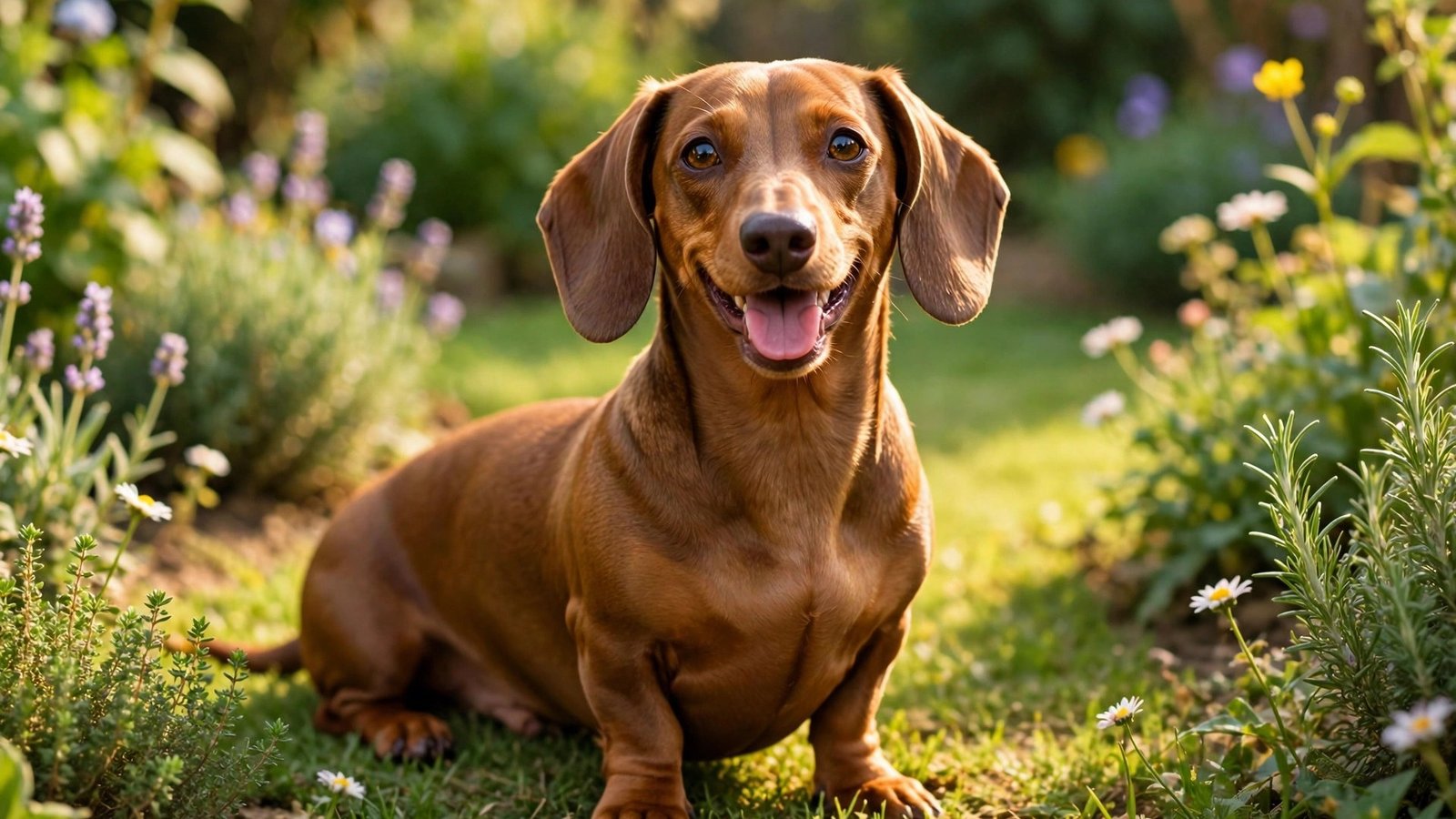
The Dachshund is a small dog with a huge personality. Bred in Germany to hunt badgers underground, it is brave, clever, stubborn and endlessly entertaining, with a long body, short legs and a big-dog attitude. Dachshunds come in two sizes (Standard and Miniature) and three coat types (smooth, long-haired and wire-haired), but all share the same loyal, lively character.
Quick Facts
- Origin: Germany.
- Group: Hound.
- Lifespan: 12–16 years.
- Weight: 4–12 kg (Miniature 4–5 kg, Standard 9–12 kg).
- Height: 20–27 cm at the shoulder.
- Temperament: Clever, brave, stubborn, loyal.
- Good with kids: Yes, with supervision — best with older, gentle children.
- Good with other pets: Yes, with early socialisation.
- Exercise needs: Moderate — about 1 hour a day.
- Grooming: Low to moderate, depending on coat type.
Temperament & Personality
Dachshunds are loyal, lively and devoted to their people — they pick a favourite person and follow them everywhere, including under the blanket. They are playful, curious and fearless, with a loud bark that belies their size, and they make surprisingly good watchdogs. They are also famously stubborn. A Dachshund was bred to make its own decisions underground, far from its hunter, so it does not always see the point of your instructions. They can be wary of strangers and snappy if handled roughly, and they dislike being left alone — a lonely Dachshund barks, digs and chews.
Health
The Dachshund’s long back is its weak point: intervertebral disc disease (IVDD) is common, and back injuries can be serious. Keep the dog lean — extra weight strains the spine — avoid letting it jump on and off furniture or climb many stairs, and use a ramp where possible. Other known issues include dental problems, eye conditions including progressive retinal atrophy, and ear infections in long-haired types. Buy from a breeder who health-tests the parents, and see the vet promptly if the dog shows back pain, wobbliness or reluctance to move.
Training
Dachshunds are clever but independent, and training needs patience, humour and treats. Short, fun, reward-based sessions work best; harsh methods make a Dachshund shut down or snap. House training can take time, so be consistent. Socialise the puppy early with people, children and other dogs, and teach a reliable recall — Dachshunds love to follow a scent and can wander off. Crate training helps with house training and gives the dog a safe den.
Food & Nutrition
A Dachshund needs strictly measured meals — this breed gains weight easily, and every extra kilo strains its back. Two measured meals a day of a good-quality complete food, with treats counted as part of the daily intake, keeps weight under control. Never feed from the table, and ask the vet for the right amount for your dog’s size, age and activity. Fresh water should always be available.
Grooming
Grooming depends on the coat: smooth-haired Dachshunds need only a weekly wipe or brush; long-haired types need brushing several times a week to prevent tangles; wire-haired types need brushing and occasional hand-stripping by a groomer. All types need regular nail trims, ear checks and teeth brushing, as small breeds are prone to dental problems. Dachshunds shed moderately.
Exercise
A Dachshund needs about 1 hour of activity a day: walks, play and scent games. It is a surprisingly energetic little dog that enjoys long walks, but exercise must be back-friendly — avoid repeated jumping and steep stairs, and lift the dog in and out of the car. Puzzle feeders and scent work tire the mind as well as the body.
Is the Dachshund Right for You?
The Dachshund suits owners who want a small, characterful, loyal companion and can give it company, gentle handling and careful weight and back care. It does well in flats and houses alike. It is less suited to families with very young children who may handle it roughly, or to owners who want a dog that obeys instantly and never barks.
FAQs
Are Dachshunds good for first-time owners?
Yes, if the owner is patient. They are loving and fun, but stubborn and slow to house-train, so consistency matters.
Do Dachshunds shed a lot?
Moderately. Smooth coats shed a little all year; long and wire coats shed less but need more brushing.
How much exercise does a Dachshund need every day?
About 1 hour of walks and play, avoiding jumping and stairs to protect the back.
Leave a Reply