
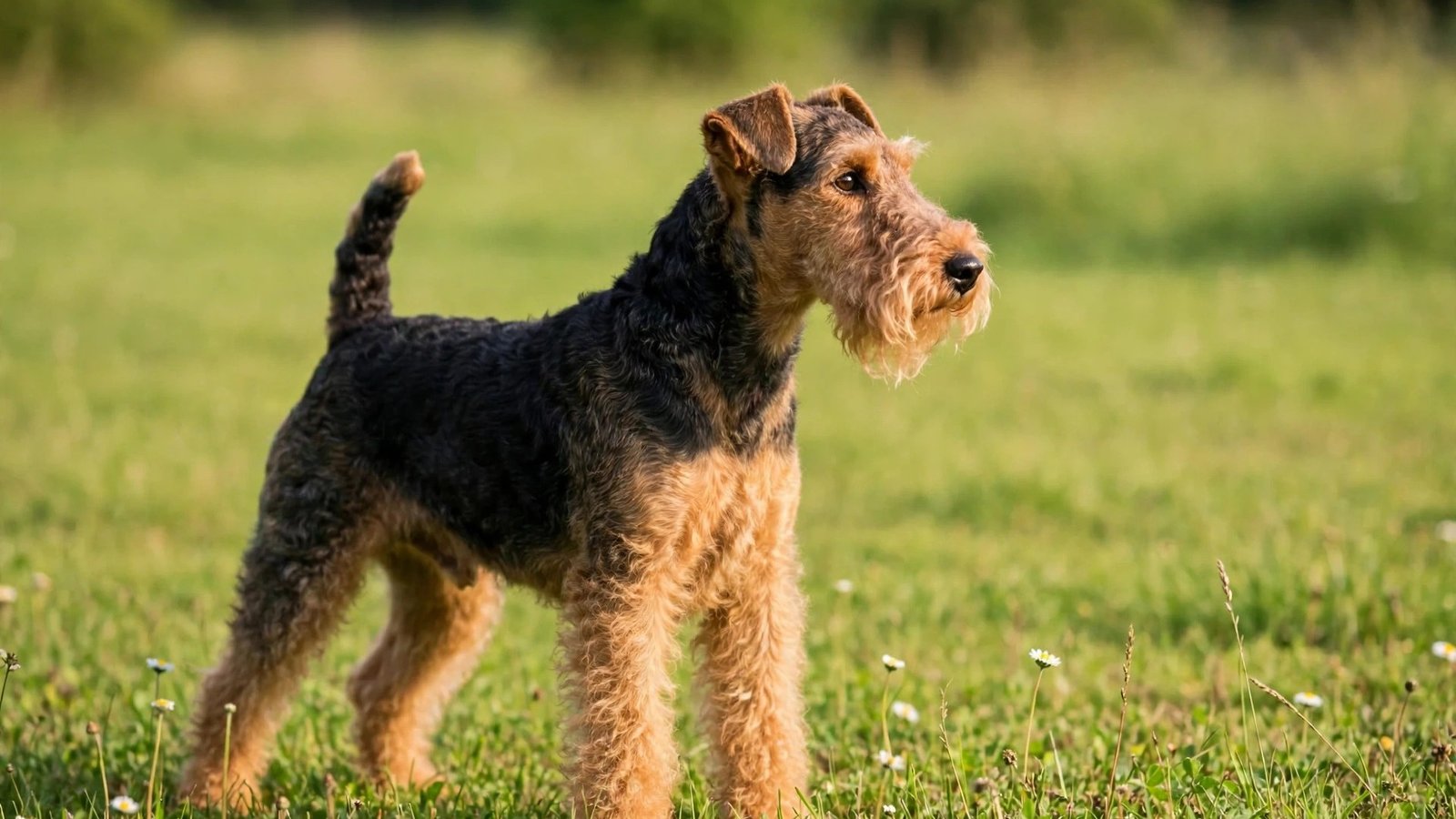
The Lakeland Terrier is a small, sturdy terrier from the Lake District in northern England, bred to hunt foxes among the rocky fells. The Lakeland Terrier is confident, friendly and intelligent, a loving family dog that loves children, other dogs and being part of everything.
Quick Facts
- Origin: England (Lake District).
- Group: Terrier.
- Lifespan: 12–16 years.
- Weight: 7–8 kg.
- Height: 33–38 cm at the shoulder.
- Temperament: Confident, friendly, intelligent, energetic.
- Good with kids: Yes — playful and sturdy with children.
- Good with other pets: Yes, with early socialisation.
- Exercise needs: High — about 1–1.5 hours a day.
- Grooming: Moderate — wiry double coat, regular brushing.
Temperament & Personality
Lakeland Terriers are confident, friendly and deeply loyal to their family. They bond closely with their people, love children, and are usually good with other dogs. They are happy, outgoing dogs that love to play and be part of everything. They are terriers through and through: they dig, chase and bark, and they need a job to do. They can be stubborn and independent, so training needs patience and consistency. They love company but can settle alone for a few hours. They are protective of the family without being aggressive.
Health
Lakeland Terriers are generally healthy and long-lived. Known issues include hip dysplasia, eye problems (lens luxation), von Willebrand disease (a bleeding disorder), and Legg-Calvé-Perthes disease (a hip condition). Buy from a breeder who health-tests the parents, and see the vet regularly.
Training
Lakeland Terriers are intelligent and quick to learn, but they can be stubborn — training needs patience, consistency and high-value rewards. Short, fun, reward-based sessions work best, and early socialisation helps them stay confident with strangers, children and other dogs. Teach a reliable recall from puppyhood: a Lakeland Terrier on a chase will not come back. Harsh methods damage trust.
Food & Nutrition
A Lakeland Terrier needs a good-quality complete food in measured meals — two meals a day suit most adults. Treats should be counted as part of the daily intake. Lakeland Terriers are lean, active dogs and should stay lean — you should be able to feel the ribs easily. A vet can advise the right amount for your dog’s age and weight, and fresh water should always be available.
Grooming
The Lakeland Terrier’s wiry double coat needs brushing two to three times a week to prevent tangles, plus hand-stripping every few months to keep the coat in shape. Baths only when dirty. The ears should be checked weekly, nails trimmed regularly, and teeth brushed. Lakeland Terriers shed lightly to moderately.
Exercise
A Lakeland Terrier needs about 1–1.5 hours of activity a day: walks, play and training games, plus mental work such as scent games, agility and puzzle feeders. They are small dogs with plenty of energy — a Lakeland Terrier needs to run, dig and think every day. Without it, expect digging, chewing, barking and escaping.
Is the Lakeland Terrier Right for You?
The Lakeland Terrier suits active families who want a confident, friendly companion and can give it 1.5 hours of exercise and plenty of company every day. It does well in flats and houses alike. It is less suited to owners away from home all day, or anyone wanting a calm, quiet dog.
FAQs
Are Lakeland Terriers good for first-time owners?
Yes, for an active first-time owner. They are friendly and trainable, but their energy and stubbornness surprise many new owners.
Do Lakeland Terriers shed a lot?
Lightly to moderately. Their wiry coat sheds all year but is easy to manage with regular brushing.
How much exercise does a Lakeland Terrier need every day?
About 1–1.5 hours of walks and play, plus training to keep the mind busy.
Leave a Reply