
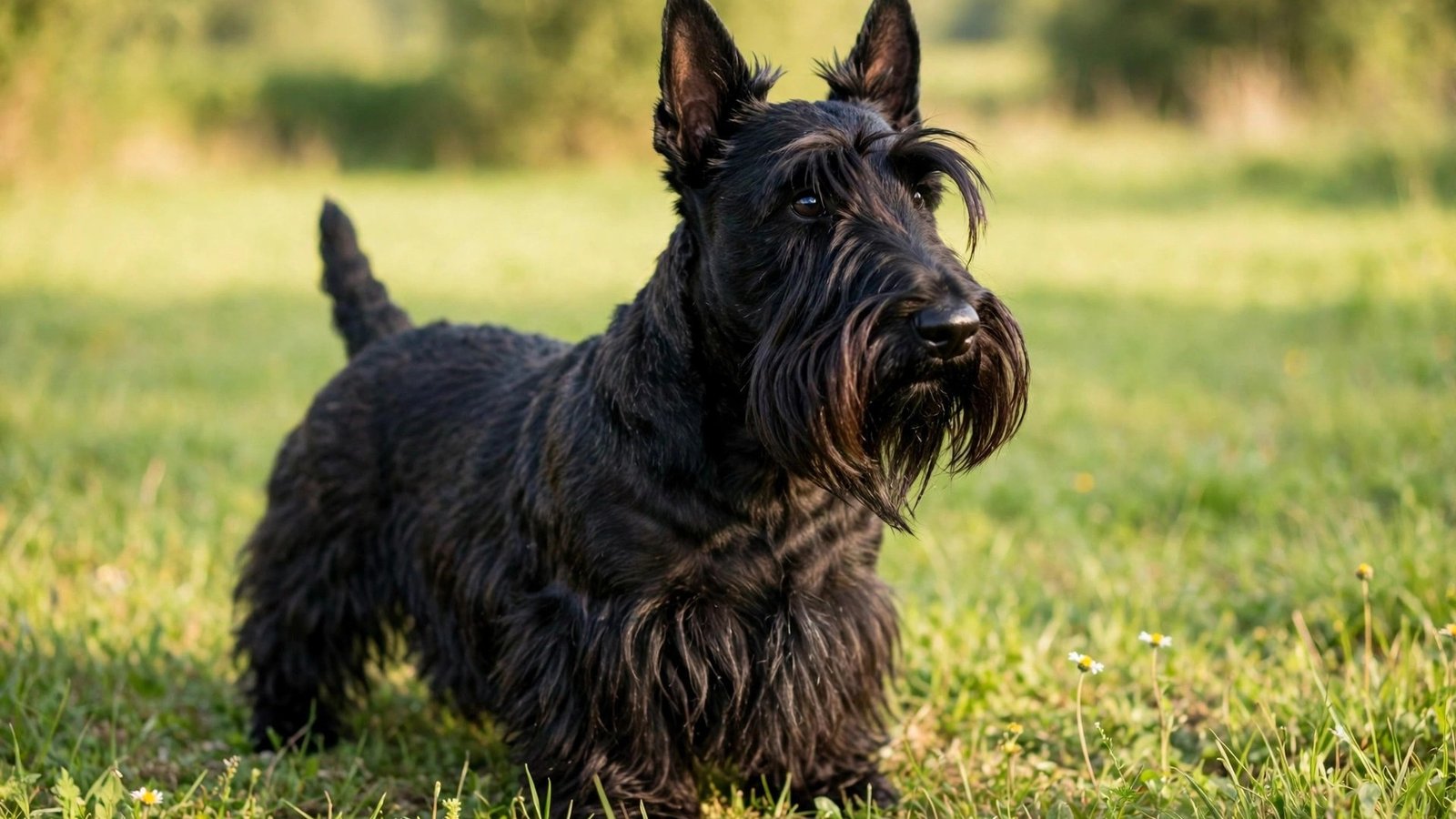
The Scottish Terrier — the Scottie — is a small, dignified terrier from Scotland with a wiry coat, a beard and a big personality. The Scottie is independent, confident and loyal, a companion that loves its family deeply but on its own terms.
Quick Facts
- Origin: Scotland.
- Group: Terrier.
- Lifespan: 11–13 years.
- Weight: 8–10 kg.
- Height: 25–28 cm at the shoulder.
- Temperament: Independent, confident, dignified, loyal.
- Good with kids: Yes — best with older children, with supervision.
- Good with other pets: Yes, with early socialisation.
- Exercise needs: Moderate — about 1 hour a day.
- Grooming: Moderate to high — wiry double coat, regular brushing.
Temperament & Personality
Scotties are independent, confident and deeply loyal to their family. They bond closely with their people and are famously dignified — a Scottie will not fawn over a stranger, and it does not enjoy being fussed over by people it does not know. They are calm indoors and love a routine. They are terriers through and through: they dig, chase and bark, and they need a job to do. They can be stubborn and aloof with strangers, so early socialisation is essential. They love company but are not needy — a Scottie is happy to rest nearby and watch over the family.
Health
Scotties need an honest health note: the breed has some serious known issues. Scottie cramp is a movement disorder that causes the legs to stiffen during exercise — it is not painful but it looks alarming. Von Willebrand disease is a bleeding disorder. Scotties also have a higher risk of bladder cancer (transitional cell carcinoma) than most breeds, and of skin allergies and Cushing’s disease. Buy from a breeder who health-tests the parents, and see the vet promptly for any blood in the urine or unusual lumps.
Training
Scotties are intelligent but independent, and training needs patience, consistency and high-value rewards. Short, fun, reward-based sessions work best, and early socialisation helps them stay confident with strangers, children and other dogs. Teach a reliable recall from puppyhood: a Scottie on a chase will not come back. Harsh methods damage trust — and a Scottie remembers.
Food & Nutrition
A Scottish Terrier needs a good-quality complete food in measured meals — two meals a day suit most adults. Treats should be counted as part of the daily intake. Some Scotties have sensitive skin or food allergies, so a vet may need to help find a suitable food. Fresh water should always be available.
Grooming
The Scottie’s wiry double coat needs brushing two to three times a week to prevent tangles, plus hand-stripping or clipping every few months to keep the coat in shape. The beard and eyebrows need keeping clean. Baths only when dirty. The ears should be checked weekly, nails trimmed regularly, and teeth brushed. Scotties shed moderately.
Exercise
A Scottish Terrier needs about 1 hour of activity a day: walks, play and training games, plus mental work such as scent games and puzzle feeders. They are small dogs with plenty of energy — a Scottie needs to walk, dig and think every day. Without it, expect digging, chewing and barking.
Is the Scottish Terrier Right for You?
The Scottish Terrier suits patient owners who want an independent, dignified companion and can give it exercise, training and regular grooming. It does well in flats and houses alike. It is less suited to first-time owners, or anyone wanting a dog that loves every stranger.
FAQs
Are Scottish Terriers good for first-time owners?
They can be a handful. Scotties are loyal and trainable, but their independence and stubbornness make them a challenging first dog.
Do Scottish Terriers shed a lot?
Moderately. Their wiry coat sheds all year but is easy to manage with regular brushing.
How much exercise does a Scottish Terrier need every day?
About 1 hour of walks and play, plus training to keep the mind busy.
Leave a Reply