
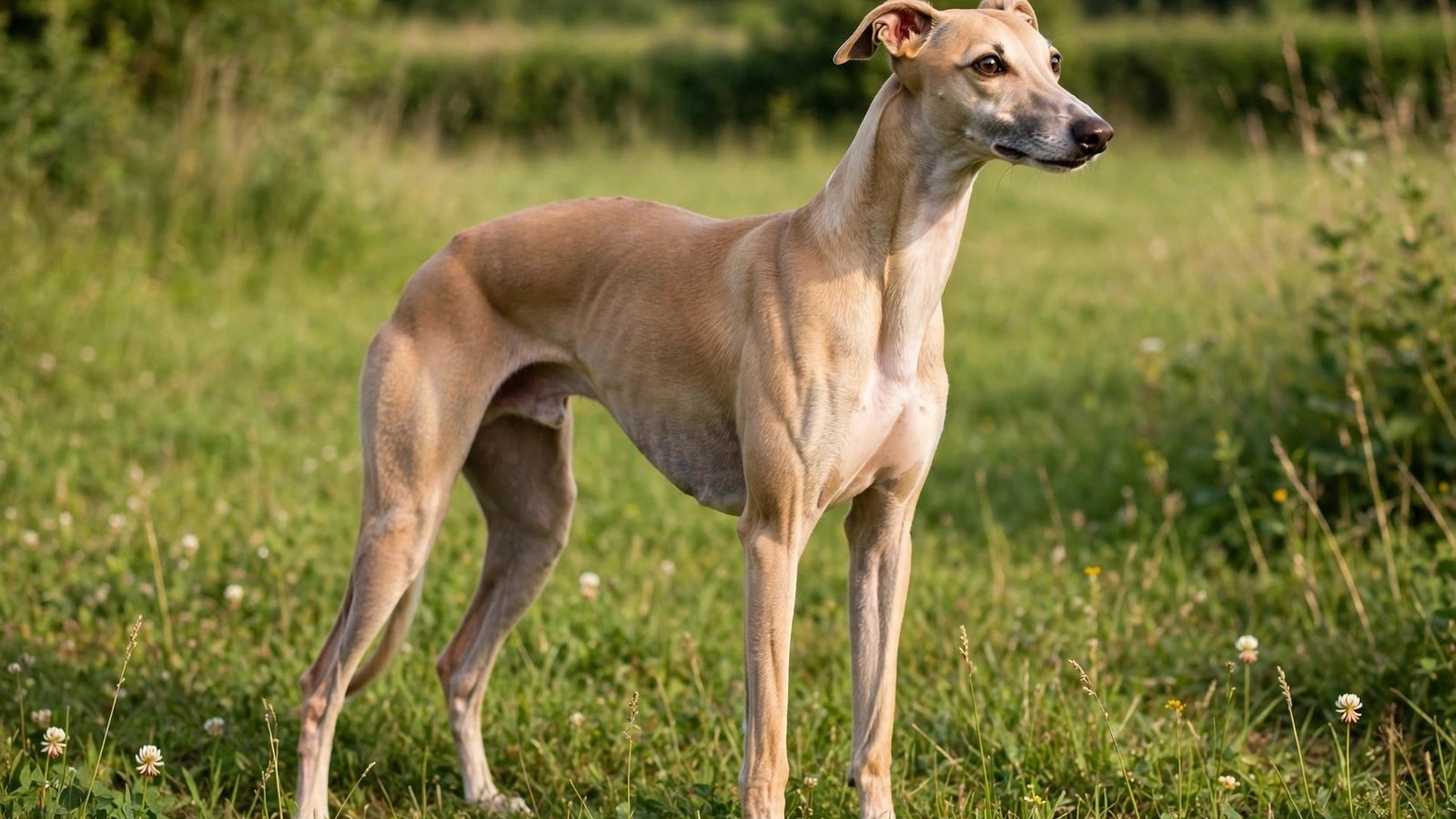
The Whippet is a gentle, graceful sighthound — a smaller, quieter cousin of the Greyhound, bred in England for racing and rabbit coursing. The Whippet is affectionate, calm and famously clean, a loving companion that sprints like lightning outdoors and sleeps like a cat indoors.
Quick Facts
- Origin: England.
- Group: Hound.
- Lifespan: 12–15 years.
- Weight: 9–19 kg.
- Height: 44–56 cm at the shoulder.
- Temperament: Gentle, quiet, affectionate, sensitive.
- Good with kids: Yes — gentle and patient with children.
- Good with other pets: Yes, with early socialisation (chases small animals).
- Exercise needs: Moderate to high — about 1 hour a day.
- Grooming: Low — short coat, easy care.
Temperament & Personality
Whippets are gentle, quiet and deeply affectionate. They bond closely with their family, love children, and are famously clean and calm indoors — a Whippet will curl up on the sofa and sleep for hours. They are sensitive dogs that respond best to gentle, positive handling. They are sighthounds with a strong chase instinct: small animals, cats and even small dogs can trigger a chase, so off-lead exercise needs a secure area. They are not guard dogs — a Whippet will greet a stranger with a wagging tail. They dislike cold and rain and will need a coat in winter.
Health
Whippets are generally healthy and long-lived. Known issues include heart disease (mitral valve disease), eye problems, sensitivity to anaesthesia (like all sighthounds — always tell the vet your dog is a Whippet before any procedure), and skin injuries from the thin coat and skin. Buy from a breeder who health-tests the parents, and see the vet regularly.
Training
Whippets are intelligent and eager to please, but they are sensitive — training needs patience, consistency and gentle, positive methods. Short, fun, reward-based sessions work best, and early socialisation helps them stay confident with strangers, children and other dogs. Teach a reliable recall from puppyhood, but never trust it fully off-lead in an open area — a Whippet on a chase will not come back. Harsh methods frighten a Whippet.
Food & Nutrition
A Whippet needs a good-quality complete food in measured meals — two meals a day suit most adults. Treats should be counted as part of the daily intake. Whippets are lean dogs and should stay lean — you should be able to see the last two ribs. A vet can advise the right amount for your dog’s age and weight, and fresh water should always be available.
Grooming
The Whippet’s short, smooth coat is very easy to care for: a weekly brush is enough, and baths only when dirty. The ears should be checked weekly, nails trimmed regularly, and teeth brushed. Whippets shed lightly to moderately. In cold weather, a Whippet needs a coat — the thin skin and low body fat mean they chill easily.
Exercise
A Whippet needs about 1 hour of activity a day: walks and play, plus the chance to sprint off-lead in a secure area — a Whippet that cannot run will not be happy. They are sprinters, not marathon runners: a short, fast run followed by a long nap is the Whippet way. A tired Whippet is a calm Whippet; a bored one will chew and dig.
Is the Whippet Right for You?
The Whippet suits quiet homes and gentle owners who want a clean, affectionate companion and can give it a daily run in a secure area. It does well in flats and houses alike. It is less suited to owners wanting a guard dog, or anyone who cannot provide a secure area for off-lead sprints.
FAQs
Are Whippets good for first-time owners?
Yes. They are gentle, clean and easy to live with — but first-time owners should be ready for the chase instinct and the need for a secure area.
Do Whippets shed a lot?
Lightly to moderately. Their short coat sheds all year but is easy to manage with a weekly brush.
How much exercise does a Whippet need every day?
About 1 hour of walks and play, plus the chance to sprint off-lead in a secure area.
Leave a Reply